Gardens Under the Canopy
Foxcroft's hardwoods are seventy years ahead of anything a new neighborhood can plant. The best gardens here work with that inheritance — editing, layering, and lighting rather than starting over.
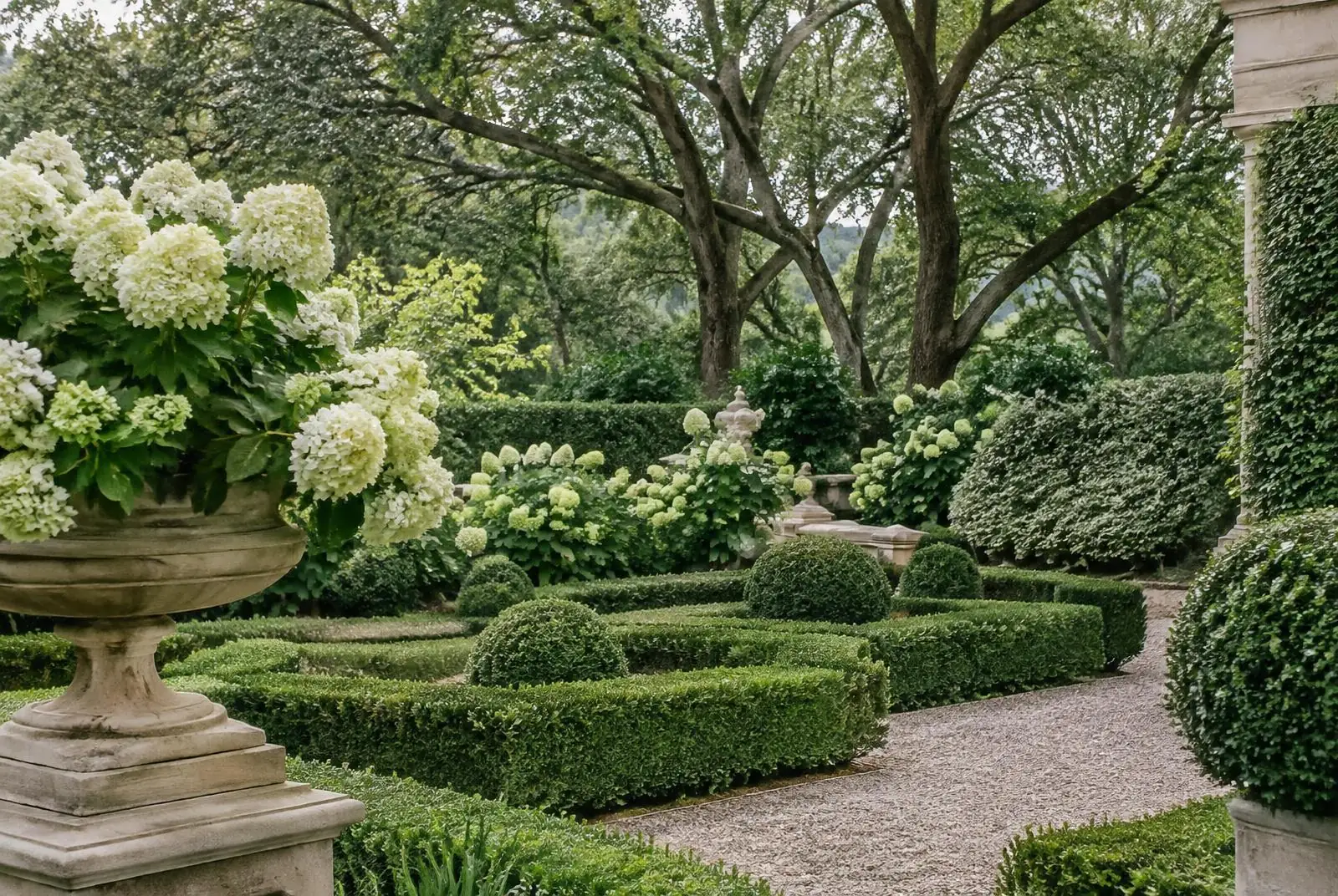
Inheritance, Not Blank Slate
A Foxcroft garden almost always begins with existing trees — willow oaks, white oaks, tulip poplars, southern magnolias planted when the streets were laid out. That canopy sets the light budget for everything below it and is worth more to the property than any new installation. The first exercise on a serious project is an inventory: which trees are healthy, which are declining, which are blocking a view that was never meant to be blocked, and where selective limbing would turn deep shade into workable dappled light.
Structure Before Flowers
Gardens that photograph well in every season are built on evergreen bones. Boxwood hedging, hollies, camellias, and clipped laurels hold the composition through January, when perennials are gone. Axial paths, hedged garden rooms, and a defined edge between lawn and bed are what make a large Foxcroft lot feel designed rather than merely spacious. Flowers are the last layer, not the first.
What Grows Well in the Shade Here
Charlotte sits in a humid subtropical climate with hot summers and mild winters, and Foxcroft's canopy adds a layer of shade to that. Hydrangeas — oakleaf, smooth, and bigleaf — are the workhorse flowering shrub. Ferns, hellebores, hostas, and epimedium carry the ground plane. Japanese maples and dogwoods make good understory trees. Turf is the perennial struggle: under dense canopy, lawn will always disappoint, and the better answer is usually to stop fighting it and extend the beds, gravel, or moss instead.
Privacy Without Walls
Foxcroft's lots are wide, but sightlines between houses still need managing, particularly where a new estate sits taller than its neighbors. Layered screening works better than a single row of arborvitae: an evergreen backbone, a mid-layer of camellia or tea olive, and something deciduous in front produces depth rather than a green fence. Screening is also the quietest way to hide pool equipment, generators, and service yards.
Water, Soil, and Maintenance
Clay soil, heavy summer rain, and long dry spells in late summer are the three conditions every planting plan here has to absorb. Bed preparation and drainage do more for plant survival than irrigation does, though a zoned irrigation system with separate programming for shade and sun areas is standard on estate properties. Maintenance is the part most often underestimated: a garden of this complexity needs a crew that prunes to a plan, not one that shears everything to the same shape twice a year.
Lighting
Landscape lighting is what makes a Foxcroft garden a nine-month room rather than a daytime one. Uplighting a specimen oak, downlighting from within a canopy to simulate moonlight, low path lights at knee height, and warm color temperature throughout produce depth after dark. The discipline is restraint: fewer fixtures, carefully aimed, always beats a perimeter of evenly spaced lights.
Frequently Asked
What defines a Foxcroft garden?+
An inherited canopy of willow oaks, white oaks, poplars, and magnolias planted when the streets were laid out. The best gardens edit and layer beneath that canopy rather than starting over, because no new planting replaces seventy years of growth.
What plants do well in Foxcroft's shade?+
Oakleaf, smooth, and bigleaf hydrangeas as the flowering workhorses; ferns, hellebores, hostas, and epimedium on the ground plane; Japanese maples and dogwoods as understory trees; boxwood, holly, camellia, and laurel for evergreen structure.
Why does lawn struggle here?+
Dense canopy denies turf the light it needs. Under mature trees the more durable answer is usually to extend planting beds, gravel, or moss rather than to keep replacing grass every season.
How is privacy handled between lots?+
Layered screening rather than a single row of arborvitae — an evergreen backbone, a mid-layer of camellia or tea olive, and a deciduous layer in front. The same approach hides pool equipment, generators, and service yards.
What should a garden lighting scheme include?+
Uplighting on specimen trees, downlighting from within canopies to imitate moonlight, low path lighting at knee height, and a consistently warm color temperature. Restraint matters more than fixture count.
What maintenance does a garden like this need?+
A crew that prunes to a plan rather than shearing everything twice a year, bed preparation and drainage suited to clay soil, and zoned irrigation programmed separately for shade and sun areas.
Garden structure, planting, and interiors that match.
Emerald & Oak Design works on the visual language that runs from the house into the garden, while Peters Custom Homes handles the masonry, structures, and grade the planting sits within.