Best Streets in Foxcroft
Every established luxury neighborhood has its interior geography — the streets residents cite when asked where they would live if they could choose again. Foxcroft is no exception.
Reading the Neighborhood
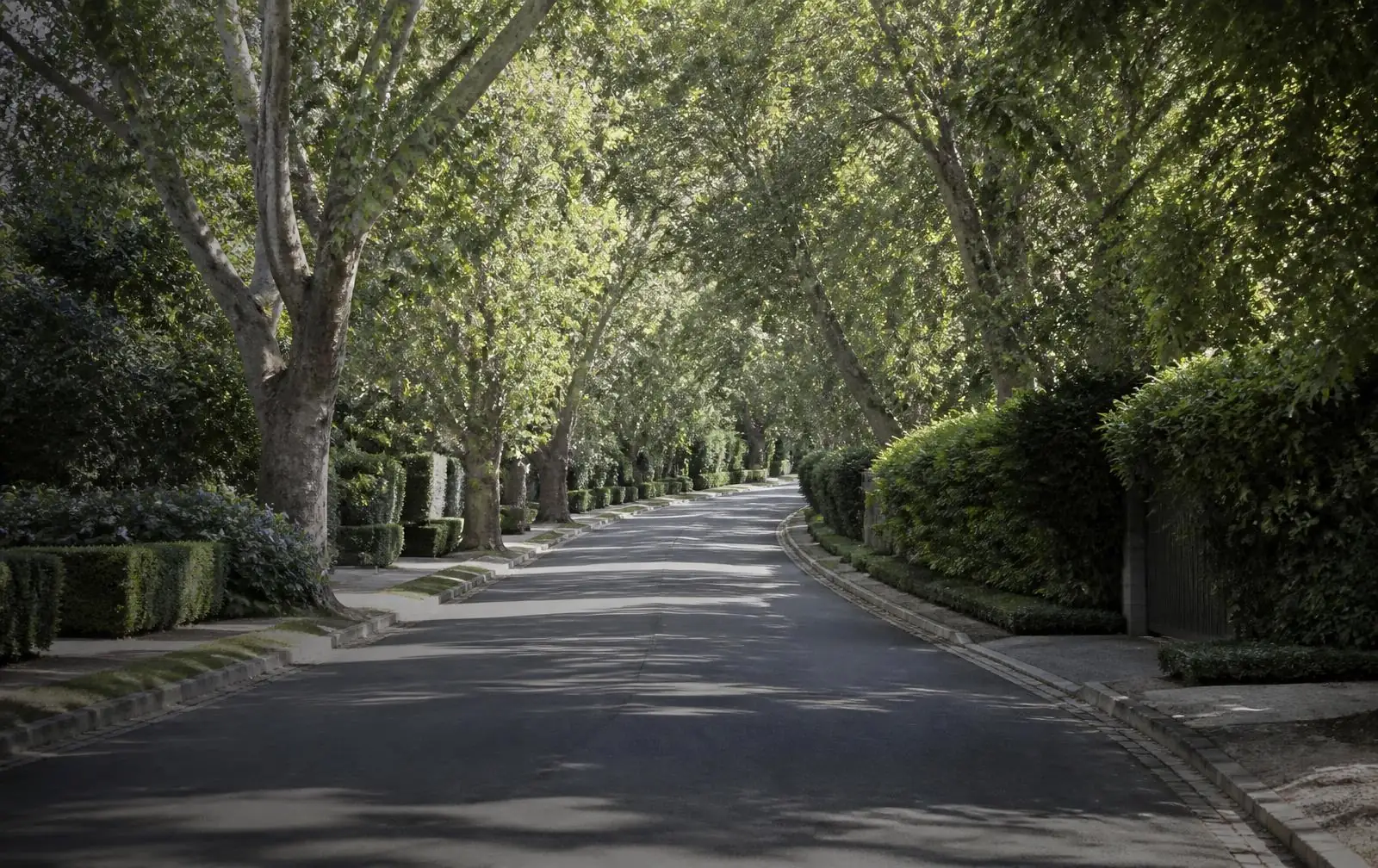
Foxcroft's street hierarchy has been remarkably stable across generations. Broadly, the neighborhood's most sought-after addresses share three characteristics: a mature interior canopy, a curve or cul-de-sac configuration that removes through-traffic, and generous lot depth toward a wooded or landscaped rear boundary.
The Original Streets
Foxcroft's earliest planned streets — home to many of its preserved originals — form the neighborhood's architectural core. Here, mid-century estates sit on gently rolling lots framed by decades-old hardwoods. These addresses tend to trade infrequently; when they do, they set the tone for the season's market.
The Cul-de-Sacs
Foxcroft's cul-de-sacs are among its most closely held secrets. Several run to a wooded rear boundary, giving their homes a private, semi-rural feel that is difficult to find anywhere within Charlotte's inner ring.
Foxcroft East
Foxcroft East — the section extending toward Providence Road — is often characterized by slightly larger lots and a mix of Foxcroft originals with more recent renovation and ground-up construction. It has become one of the neighborhood's most active submarkets for buyers seeking both provenance and modernized systems.
How To Evaluate a Street
When touring Foxcroft, look at the canopy first, the pavement second, the pattern of driveway curves third, and the lot depth relative to the street width last. A broker who genuinely knows Foxcroft can walk you through this on the ground. When a street shortlist is in hand, cross-reference it with current Foxcroft inventory.
Frequently Asked
What are the best streets in Foxcroft?+
The most sought-after addresses are the interior streets with the deepest lots and heaviest canopy, away from through traffic — quiet cul-de-sacs and the original planned streets at the neighborhood's core.
Does the street affect a Foxcroft home's value?+
Significantly. Two similar houses can differ meaningfully in value based on lot depth, canopy, grade, and traffic on the street they sit on.
Are there cul-de-sacs in Foxcroft?+
Yes. Several of the neighborhood's quietest and most protected addresses sit on cul-de-sacs, which is part of why they rarely come to market.
Which streets have the largest lots?+
The interior streets of the original plan generally hold the widest and deepest lots, several of which comfortably support a main house, pool, and pool house.
How does traffic vary within Foxcroft?+
Perimeter streets carry more movement given proximity to Fairview and Sharon Roads, while interior streets see almost exclusively local traffic.
Do corner lots trade differently?+
They often do. Corner lots gain light and presence but lose some privacy, so buyer preference — and pricing — varies with how the house is sited.
Walk the neighborhood.
Peters & Associates arranges private, unhurried tours of Foxcroft on foot and by car — including a candid discussion of which streets suit which buyers.