Roofs, Copper & the Envelope
On a Foxcroft estate the roof is a visible part of the architecture, not a utility. Material, pitch, ridge detail, and the copper that drains it are what a trained eye reads first from the street.
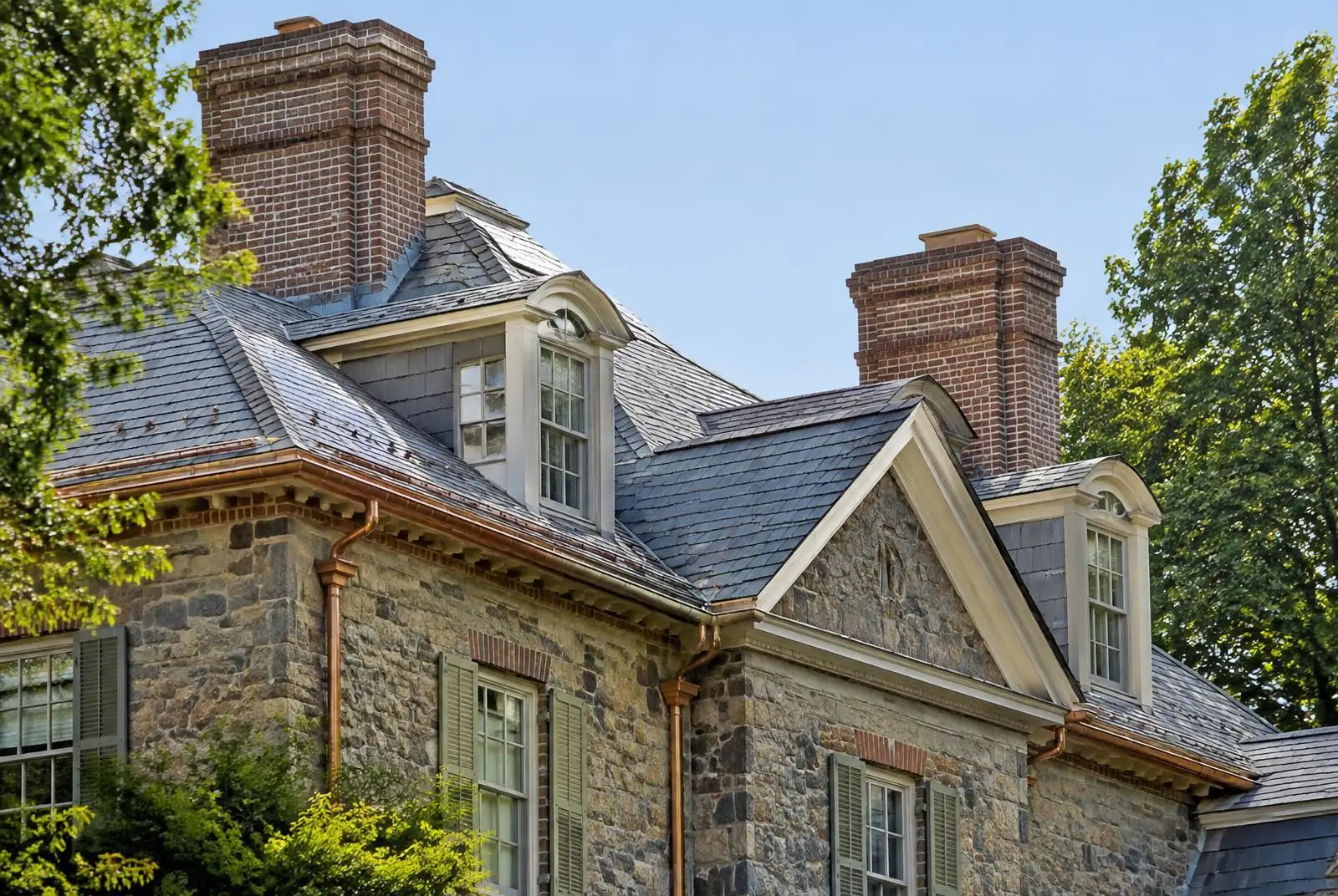
What the Neighborhood Wears
Four roof materials account for most of Foxcroft. Natural slate appears on the Georgian and Tudor-influenced houses and is the longest-lived of the group. Cedar shake, historically common, has largely been replaced or converted because of maintenance and fire considerations. Standing-seam metal shows up on porches, bays, and dormers across many styles, and occasionally as a whole roof on newer estates. Heavyweight architectural shingle — the synthetic-slate and dimensional products — covers the majority of renovated mid-century houses, where the original roof line does not ask for anything grander.
Matching the Roof to the House
The most visible mistake in estate roofing is a material that is correct on its own and wrong for the façade. A lightweight three-tab profile on a heavy brick Georgian flattens the whole elevation. Conversely, a slate roof on a low-slung mid-century ranch reads as costume. The safest guide is pitch and mass: steep, complex rooflines with dormers and multiple chimneys want a textured, dimensional material; shallow modern pitches want metal or a clean shingle with a tight shadow line.
Copper Is the Detail That Ages Well
Half-round copper gutters, round downspouts, copper valleys, chimney caps, and standing-seam bay roofs are the mark of a house detailed properly. Copper costs more at installation and then largely stops asking for attention, weathering from bright penny to brown to a green patina over decades. Where copper is not in the budget, the profile still matters: half-round aluminum in a dark finish reads far better on a traditional house than a stock K-style section.
The Canopy Tax
Foxcroft's mature oaks drop leaves, acorns, and small limbs onto these roofs for months each year. Valleys clog, gutters fill, and debris trapped against a chimney keeps flashing wet through the winter. Regular clearing is a genuine maintenance line item here, and gutter guards, oversized downspouts, and accessible valley detailing are worth specifying at installation. Overhanging limbs abrading a roof surface are a slower and more expensive problem than the same limbs over a driveway.
Where Leaks Actually Start
Field failures are less common than penetration failures. Chimney counter-flashing, sidewall step flashing, skylight curbs, and the transition where a porch roof meets a wall are where water finds its way into a Foxcroft house. On older houses the flashing is often original even when the shingles are not, which is why an envelope assessment looks at the joints before it looks at the field.
Ventilation and Attics
Charlotte summers put real load on an attic, and a roof replacement is the natural moment to correct intake and exhaust ventilation, air-seal the ceiling plane, and revisit insulation. Doing that work at the same time as the roof costs a fraction of doing it later, and it shows up in comfort on the second floor more than almost any other single improvement to an older estate house.
Frequently Asked
What roof materials are found on Foxcroft houses?+
Natural slate on Georgian and Tudor-influenced houses, standing-seam metal on porches, bays and some newer estates, heavyweight architectural and synthetic-slate shingle on renovated mid-century houses, and a diminishing amount of cedar shake.
How do you choose a roof material for an estate house?+
By pitch and mass. Steep, complex rooflines with dormers and multiple chimneys want a textured, dimensional material; shallow modern pitches want metal or a clean shingle with a tight shadow line. A lightweight profile flattens a heavy brick façade.
Is copper worth the cost?+
Half-round copper gutters, round downspouts, valleys, and chimney caps cost more to install and then largely stop asking for attention, weathering to brown and then to patina over decades. Where copper is out of scope, a half-round profile in a dark finish still reads far better than stock K-style.
How does the tree canopy affect roofs here?+
Leaves, acorns, and limbs fill valleys and gutters for months each year, and debris trapped against a chimney keeps flashing wet through winter. Regular clearing, oversized downspouts, and accessible valley detailing are genuine maintenance considerations in this neighborhood.
Where do roof leaks usually begin?+
At penetrations rather than in the field — chimney counter-flashing, sidewall step flashing, skylight curbs, and porch-roof-to-wall transitions. On older houses flashing is often original even when the shingles are not.
Should attic work happen during a roof replacement?+
It is the natural moment. Correcting intake and exhaust ventilation, air-sealing the ceiling plane, and revisiting insulation costs a fraction of doing it separately and shows up immediately in second-floor comfort.
Envelope work on estate houses.
Peters Custom Homes manages roof and exterior envelope scopes on Foxcroft houses — slate and metal detailing, copper work, chimney and flashing repair — usually as part of a wider renovation plan.